-

Media, Infrastructures, and the Environment
COMM 2015-301
Spring 2025, University of Pennsylvania
Co-taught with Matt Parker
Course websiteHow does the environment factor into the production, design, and use of media technologies and infrastructures? How does media shape the way we think about the natural environment? How do we make our media sustainable in an era of climate change?
This interdisciplinary course explores the relationship between humans, media technologies, and the environment. Students will learn how the more-than-human world shapes communication technologies, from beacon fires and carrier pigeons to telegraph cables, radio, fiber optics, and satellites.
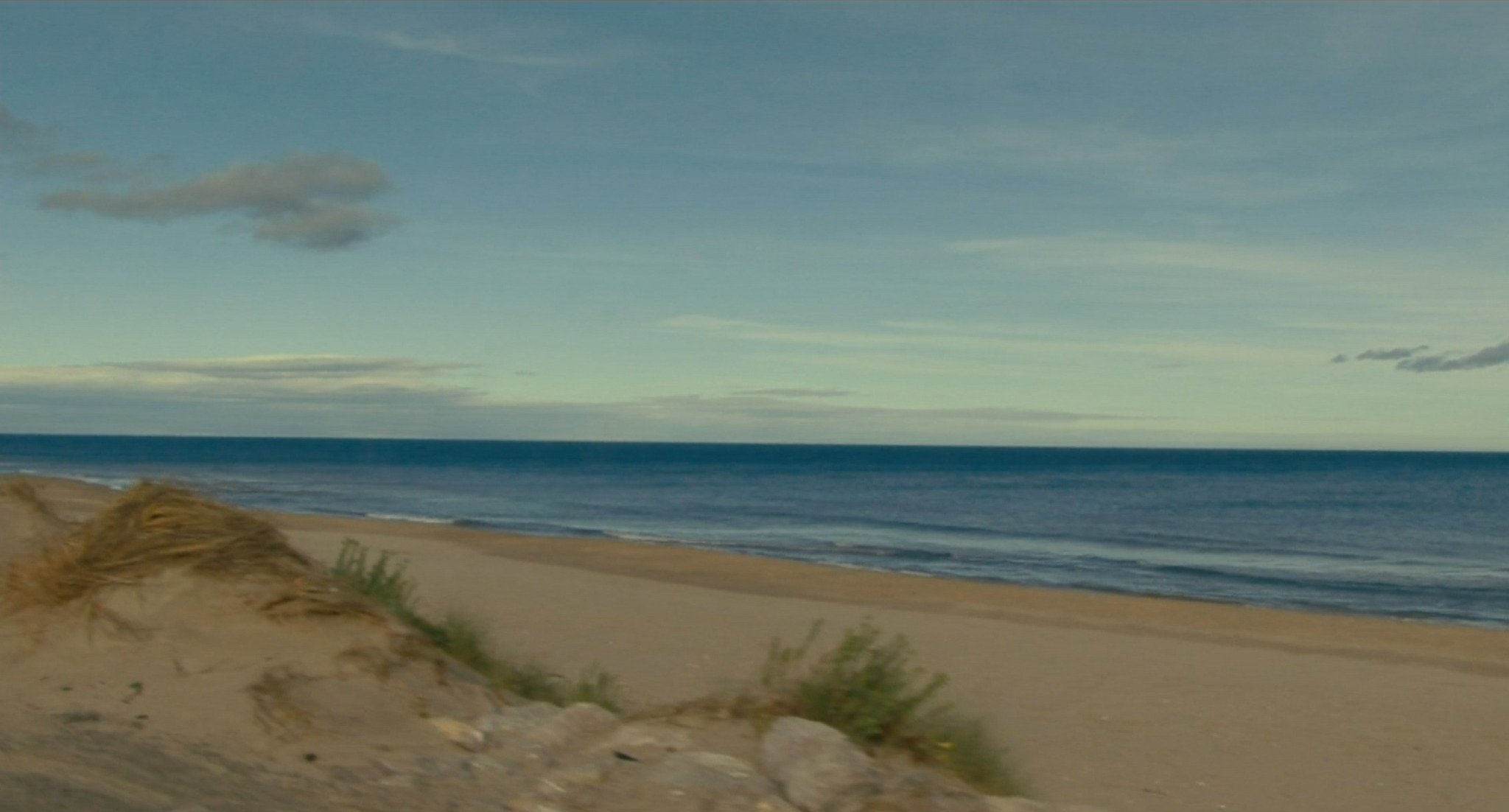
The photo above shows a student’s final project. The prompt was to create a media object that illustrates a new geological era akin to the “Anthropocene.” The student imagined a new planetary era where “old” media objects like iPhones are recovered at archaeological sites.
-

Ecological Cinema and Media: the Moving Image and the Environment
FTV 331 (Film, Media, and Social Justice)
Spring 2024, Loyola Marymount University
Cinema creates worlds: a film illuminates for us physical and social relationships that structure the world and enliven the actors that occupy it. How does the natural environment exist in this world? How does cinema influence our relationship to the planet?
In this course, we investigate how cinematic media privileges, mediates, and even conceals the ecological through film form with political, ethical, ideological, and economic concerns and frameworks. We explore the relationship between moving image media and the environment, investigating how themes like global climate change, extreme weather events, colonialism and environmental racism, ecofeminism, wilderness, animal rights, anthropocentrism, and technology, are explicitly and implicitly expressed through the cinematic image. In addition, this course also examines the material impact of film and media infrastructures on the environment.The photo features two of the many films screened in this class: Safe (1995, dir. Haynes) and Behemoth (2015, dir. Liang).
-
World Cinema 1895-1955
FTV 2100
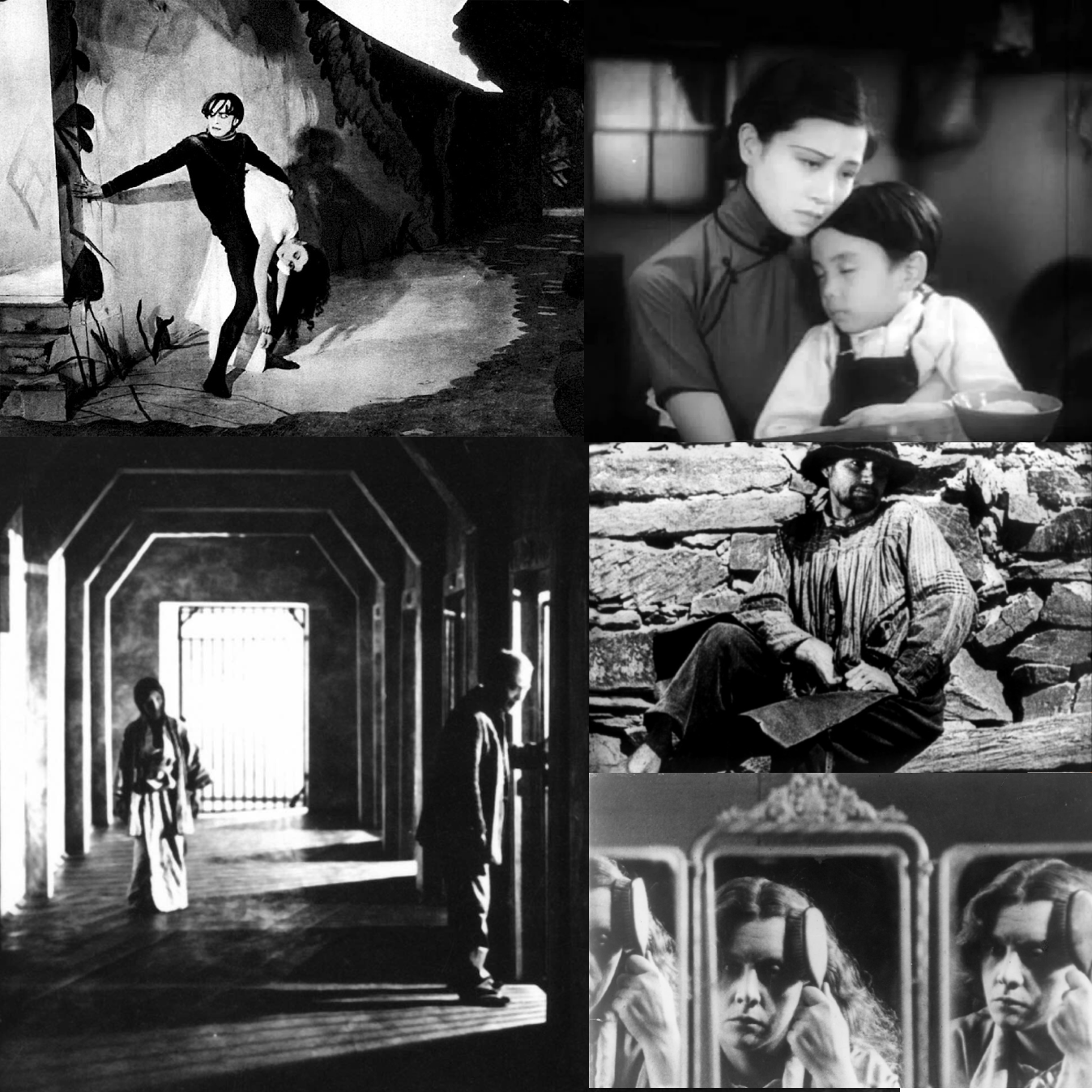
Fall 2023, Spring 2024, Loyola Marymount UniversityThis lecture class offers a historical survey of international film movements and their social, political, and economic determinants. The image above features some of the films screened during the semester: (clockwise from top left) The Cabinet of Dr. Caligari (dir. Robert Wiene, 1920); The Goddess (dir. Wu Yonggang, 1934); Land Without Bread (dir. Luis Buñuel, 1933); The Smiling Madame Beudet (dir. Germaine Dulac, 1923); A Page of Madness (dir. Teinosuke Kinugasa, 1926).
Alongside the social, political, economic, and aesthetic determinants that influenced these early films, the class also introduces students to different subfields and methodologies within the field of film studies, such as ecocriticism, feminist film studies, experimental cinema, and documentary film studies. -
Introduction to Film
FTV 140
Fall 2023, Spring 2024, Chapman University*This large lecture course explores the essential elements of film through lecture, discussion, and viewing of a wide variety of films and film excerpts. Students will learn about formal components of film analysis such as cinematography, mise-en-scène, editing, sound, performance, as well as narrative elements like genre. The class teaches students to consider film as a unique and meaningful form of art, entertainment, and imagination that structure and disseminate powerful stories about societies and culture. The course prepares students with foundational skills and knowledge in film and media studies needed for future courses they wish to take in the field.
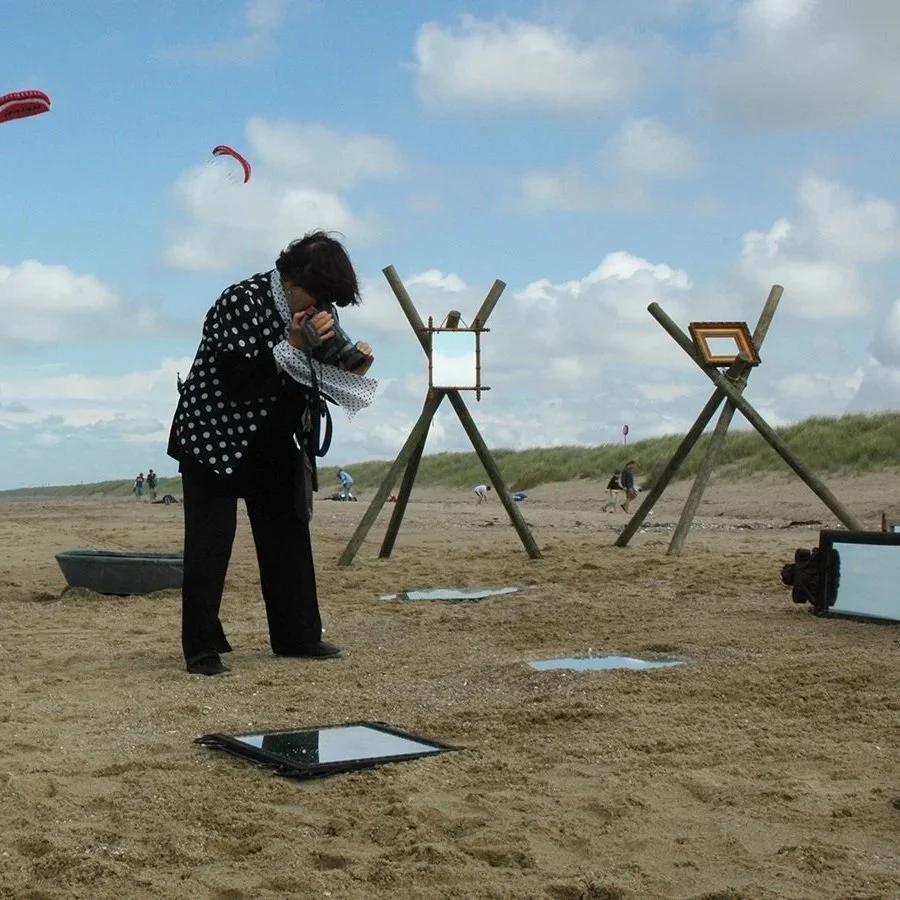
Cover image features the wonderful Agnès Varda in The Beaches of Agnès (2008).
*Also taught and managed iterations of this course at the University of Southern California